A Dockerfile for one binary
Two stages, one file copied, one non root user. The image contains the program and almost nothing else.
The build produces a static binary, so the runtime image does not need a Go toolchain, a shell script, or the source. Two stages keep those apart.
The file
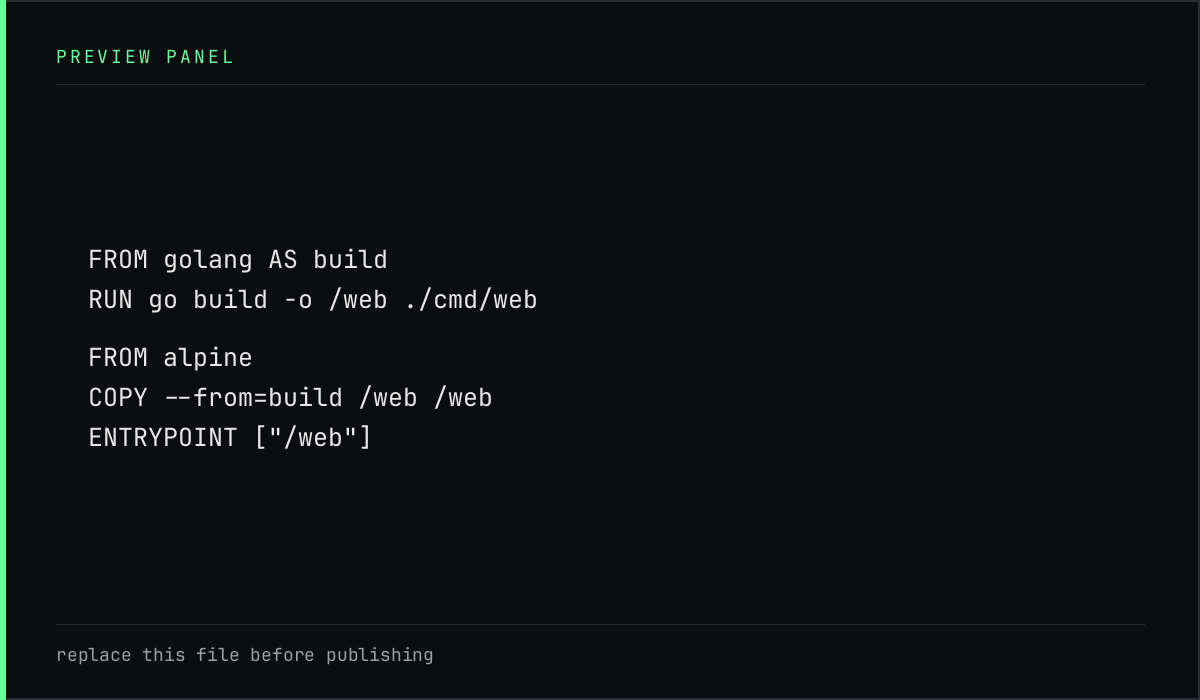
FROM golang:1.27-alpine AS build
WORKDIR /src
COPY go.mod go.sum ./
RUN go mod download
COPY . .
RUN CGO_ENABLED=0 go build -trimpath -ldflags="-s -w" -o /out/web ./cmd/web

FROM alpine:3.22
RUN adduser -D -H -u 10001 app
COPY --from=build /out/web /app/web
USER app
EXPOSE 8080
ENV ADDR=:8080
ENTRYPOINT ["/app/web"]
The lines that matter
| Line | Why |
|---|---|
COPY go.mod go.sum before COPY . . |
The module layer is cached until dependencies change |
CGO_ENABLED=0 |
A static binary, so the runtime image needs no C library |
-trimpath -ldflags="-s -w" |
No local paths in the binary, no debug tables |
USER app |
The process does not run as root |
ENTRYPOINT ["/app/web"] |
No shell wrapper, so signals reach the program |
The order of the two COPY instructions is the difference between a rebuild that
takes a moment and one that downloads every dependency again.
Why not scratch
scratch is smaller, but it has no timezone data and no CA certificates. The
site needs neither today. Alpine costs a few megabytes and keeps the door open
for a curl during a debug session on the host.
The smallest image is not always the best one. The image you can still inspect at 2am is worth a few megabytes.
Building and running
podman build -t personal-website .
podman run --rm -p 127.0.0.1:8080:8080 \
  -e SITE_URL=https://example.com \
  personal-website
-p 127.0.0.1:8080:8080 publishes on loopback only. A tunnel or a reverse proxy
on the same host reaches it; nothing else does.
What is not in the image
No database client, no package manager cache, no source, no .git. If a future
change needs one of those at runtime, that is a signal the design moved, not a
reason to add a line here.